

PCB relay cleaning should be approved for the exact relay construction and the complete assembly process. A closed plastic cover does not by itself establish washability. Before washing a board, identify the ordered sealing version, confirm the cleaning agent and exposure conditions, and obtain the applicable manufacturer instructions. Flux-resistant, dust-proof and sealed constructions must not be treated as interchangeable. For a production purchase, the useful deliverable is a documented process with inspection and functional acceptance criteria, rather than a general instruction to rinse every relay after soldering.
Start with the relay version, not the appearance
Two components can share a family name and outline while having different enclosure options. An external photograph helps identify a product family, but it cannot establish a seal specification, a suitable solvent or permission for ultrasonic cleaning. Those decisions require the exact ordering code and its process documentation. Record the full code from the purchase order and the received component packaging before approving the board assembly route.
The AS3F PCB relay is a relevant starting point for compact through-hole relay applications. Its PCB terminal designation identifies a connection method. That designation does not establish whether a particular ordered version is washable, whether its cover is vented or whether the assembly may undergo a specific coating operation. Keep electrical selection and process compatibility as separate lines in the component approval record.
If the available documentation does not answer a cleaning question, ask for clarification before committing the assembly lot. Do not resolve the gap by assuming that an apparently similar component from another supplier has the same construction. A general process guide can identify questions to ask; it cannot supply missing Asiaon product instructions.
What the different enclosure descriptions do and do not tell you
Dust protection concerns the enclosure’s resistance to ordinary contamination under specified conditions. Flux protection concerns an assembly exposure. A sealed or washable designation also requires its own definition and limitations. None of these words should be extended into an unrestricted claim about immersion, pressure spray, operating liquid exposure or long-term environmental sealing.
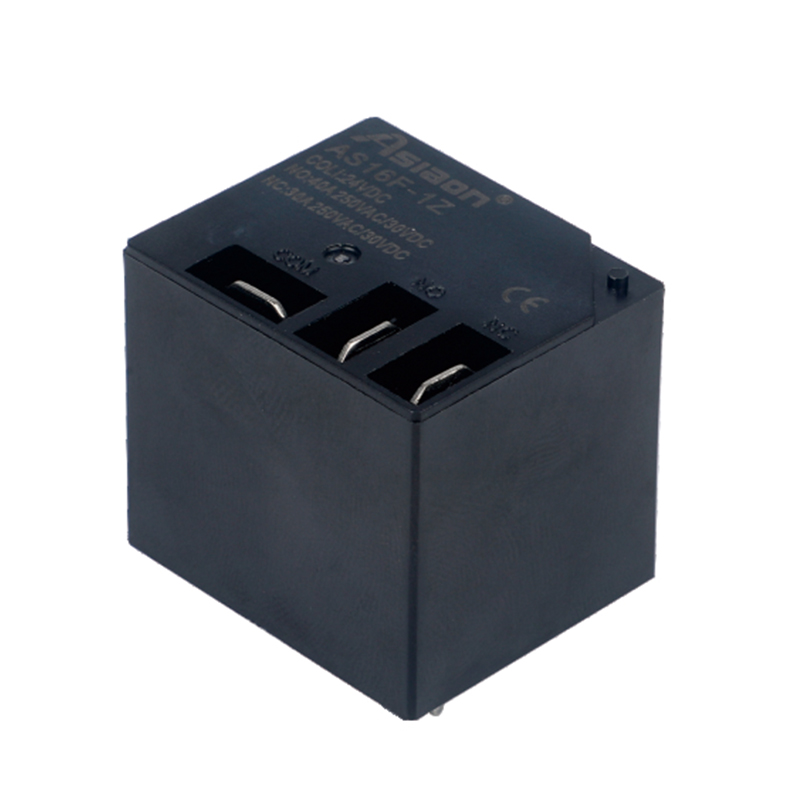
The AS16F product page expressly lists plastic-sealed and dust-proof types as available options. This is a reason to confirm the ordered version, rather than a reason to wash every AS16F. The image below shows the product family and its visible terminal arrangement; it does not identify the sealing option of an incoming production batch.
Supplier technical guides commonly separate cooling, cleaning and coating as different process stages. They also make cleaning permission conditional on construction and chemistry. Those distinctions are valuable during engineering review, but numerical temperatures, dwell times and solvent lists from another relay family must remain outside an Asiaon work instruction unless specifically validated and approved for it.
Decide why the board needs cleaning
Begin with the residue requirement for the finished assembly. Identify the flux chemistry, board environment, inspection requirements and any subsequent bonding or coating operation. A visible residue is not automatically a relay defect, while a board that looks clean is not automatically free of harmful contamination. The assembly specification should define what is acceptable and how that condition will be assessed.
The University of Pennsylvania soldering guide explains the role of flux in removing oxides during joint formation and distinguishes different flux properties. It provides useful background for discussing the process with an assembler. It is not a relay wash specification. Use the flux supplier’s process information alongside the exact component instructions when deciding whether and how residues should be removed.
A no-clean flux designation should also be evaluated in context. Ask whether the actual board process and end-use requirements allow the residue to remain, rather than translating the product label into a universal acceptance statement. If cleaning is required, changing the cleaning agent can be a manufacturing change that affects component compatibility, residue behavior and the drying process. Record the revision and requalification decision.
Review the whole cleaning route
| Review item | Evidence to record | Acceptance action |
|---|---|---|
| Exact version | Full order code and sealing construction | Obtain version-specific cleaning instructions |
| Flux | Chemistry and supplier process document | Match residue policy to assembly requirements |
| Wash process | Agent, concentration, temperature and exposure | Use only a documented compatible process |
| Cooling and drying | Sequence and validated conditions | Avoid an unapproved hot-to-cold transfer |
| Coating | Material and masking instructions | Confirm compatibility before coating |
| Release | Inspection and electrical checks | Retain a traceable lot and process record |
This is a qualitative review table, not a list of universally approved wash conditions. Its acceptance actions depend on the applicable component and assembly documentation. Keep the cleaning recipe under revision control so that production staff can distinguish an approved setting from a trial setting.
Describe the method precisely. Immersion, spray, localized brushing and ultrasonic cleaning are different exposures. Include the cleaning agent, concentration, temperature, duration, pressure where relevant and the treatment of the component side of the board. Avoid descriptions such as “standard wash” that leave the important conditions to a subcontractor’s interpretation.
The route also needs a defined cooling interval or condition after soldering and a documented drying stage. Do not transfer a hot assembly into an unapproved cold bath. Do not assume that a surface that appears dry proves that no fluid remains beneath components or within an enclosure. Any drying method must respect the limits of all affected parts, not just the relay.
Protect the component while making the solder joint
Cleaning cannot repair damage caused during assembly. Before the wash discussion, verify board fit, supported mounting method, soldering process and handling. A terminal should enter its intended hole without forcing the relay body or bending a lead to compensate for a footprint mismatch. The qualified soldering route must account for the board and nearby components as well as the relay.
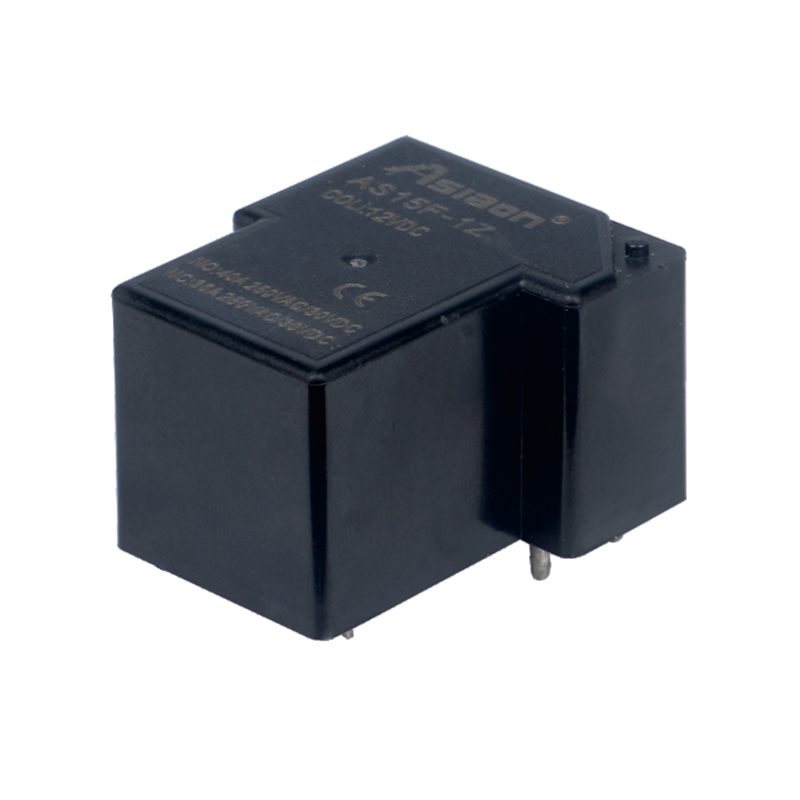
The AS15F PCB relay illustrates a different body and terminal arrangement within the PCB relay range. Its product page identifies PCB connection, but that does not authorize any reflow or wave-solder profile. Request the appropriate process limits for the exact version, and keep the approved profile with the assembly drawing. Do not infer process compatibility from the contact load rating.
Rework deserves its own review. A repaired board may receive a different flux, additional heating and localized cleaning that were absent from the original production route. Document those differences. A process approved for a new board should not automatically become permission for repeated heating or aggressive cleaning of a repaired relay assembly.
Treat venting and conformal coating as separate approvals
Some relay constructions have a manufacturer-defined venting provision. Whether it must be opened, when it should be opened and which ratings depend on that condition are product-specific matters. Do not drill, cut or remove a feature merely because another manufacturer’s guide describes venting. Obtain the exact instruction and preserve traceability to the version being assembled.
Conformal coating is another exposure that needs an explicit compatibility decision. Record the coating material, application method, masking boundaries and curing conditions. A coating that protects a circuit board can still be unsuitable for a relay enclosure, a vent opening or an accessible contact interface. Check the whole bill of materials before approving a common coating route.
Avoid using a finished photograph as evidence of a successful seal. Instead, record which surfaces were intentionally exposed or masked and how the completed process was inspected. If a subcontractor proposes substituting a coating or cleaner, review the substitution before it enters the production lot. The important evidence is a repeatable process with known limits.
Qualify samples and define release checks
Choose representative assemblies and record their component lots, board revisions and processing conditions. Include the important permitted production variations in the qualification plan. The objective is to show that the approved route produces acceptable assemblies, not simply that one sample operated once immediately after washing. Define the required inspections and electrical checks before processing the samples.
Inspect the joints and surrounding board for the assembly defects addressed by the applicable workmanship requirements. Check for residue, damage and visible enclosure changes using the specified method. Functional tests should exercise the relay’s intended states under approved conditions. Any insulation or dielectric testing must use the correct procedure and limits; a generic high-voltage test can itself be inappropriate for an assembled board.
The University of Vermont FabLab soldering resources combine training requirements with introductory and advanced learning material. They support the need for trained assembly personnel. They do not certify a production board or replace contractual workmanship criteria. Keep training records, process qualification and product acceptance as related but distinct evidence.
What to send with a PCB relay inquiry
Provide the required electrical function, full relay order code, board drawing and proposed assembly route. Include the flux, cleaner, coating and rework materials by exact identification. State whether the proposed process involves immersion, spray or ultrasonic exposure, and request written confirmation of permitted conditions for the actual sealing version. Ask for unresolved points to be identified explicitly.
For recurring purchases, keep a controlled component approval sheet that connects the order code to the process revision. Include incoming identification, permitted substitutions and the checks needed after a change. If a different enclosure version is supplied, hold the process decision open until compatibility is confirmed. Similar electrical specifications do not close that manufacturing question.
Frequently asked questions
Does a plastic cover mean a PCB relay is washable?
No. A cover identifies an external construction feature, while washability depends on the exact sealing version and its documented process limits. Confirm the full order code and cleaning instructions before allowing immersion, spray or any other wash exposure.
Can ultrasonic cleaning be used for any sealed relay?
No universal approval follows from the word sealed. Obtain explicit permission and conditions for the exact relay and assembly process. If that evidence is unavailable, keep ultrasonic cleaning outside the approved route rather than treating another component’s process as a substitute.
Should a relay be vented before conformal coating?
The correct sequence is product-specific. Follow the exact relay instructions for any venting feature and approve coating compatibility, masking and curing separately. Do not open or modify an enclosure based only on a general guide or a photograph.
Video: measurement and circuit background
This introductory soldering lesson is included in the University of Vermont FabLab learning resources. It explains joint-making principles, not permission to wash any particular relay or a qualified production process.
Watch Collin’s Lab: Soldering on YouTube
Related relay planning guides
For control component fundamentals, start with our general-purpose relay selection guide. Continue with PCB Relay Footprint Checks Before Approving a Replacement, and Relay Minimum Switching Load: Specify Reliable Low-Level Contacts.